Meowant litter box guide: SC01 vs SC02, plus XL & open-top
Affiliate disclosure: This article contains affiliate links. We may earn a commission if you buy through them.
If you’re comparing a Meowant litter box to reduce daily scooping, the practical questions come first: which model fits your cats and space, how quiet it runs, and what simple routine keeps odor and sensors in line. The choices differ more by size, waste-bin capacity and entry height than by basic function, so a quick fit-by-household approach works well.
Start here: the quick case for Meowant and how to choose
What makes Meowant relevant is the common core across its lineup: automatic sifting after each visit, app-based activity logs, and multi-cat messaging on the site. That means you can start with fit—cat size, entry preference and available floor space—then consider how often you’re willing to empty the bin. Pick by cats and space, not by marketing headlines.
Households with one to three average-size cats can look to enclosed models first. The Meowant pages show two enclosed drums: the Meowant Self-Cleaning Cat Litter Box – MW-SC01 and the Meowant Self-Cleaning Cat Litter Box – MW-SC02. They share app monitoring and rotating-drum cleaning; the practical differences are size, entry height, bin capacity and stated noise. App tracking is included across these models, so noise, footprint and emptying cadence become the tie-breakers.
If you have larger breeds or multiple cats, Meowant’s XL enclosed option (SC09) and an open-top extra-large model (SC10) extend space and waste capacity. XL and open designs take more room but can lengthen the emptying interval and make entry easier for big cats or cats who dislike enclosed doors. The rest of this guide maps each model to typical homes and gives simple setup and upkeep steps based on Meowant’s own specs.
Meowant litter box models: SC01 vs SC02, plus XL and open-top options
Here’s how the main models differ in ways that change daily use. We focus on the core fit decisions—footprint, entry height, noise and emptying frequency—using the official numbers from Meowant’s product pages.
SC01 vs SC02 at a glance
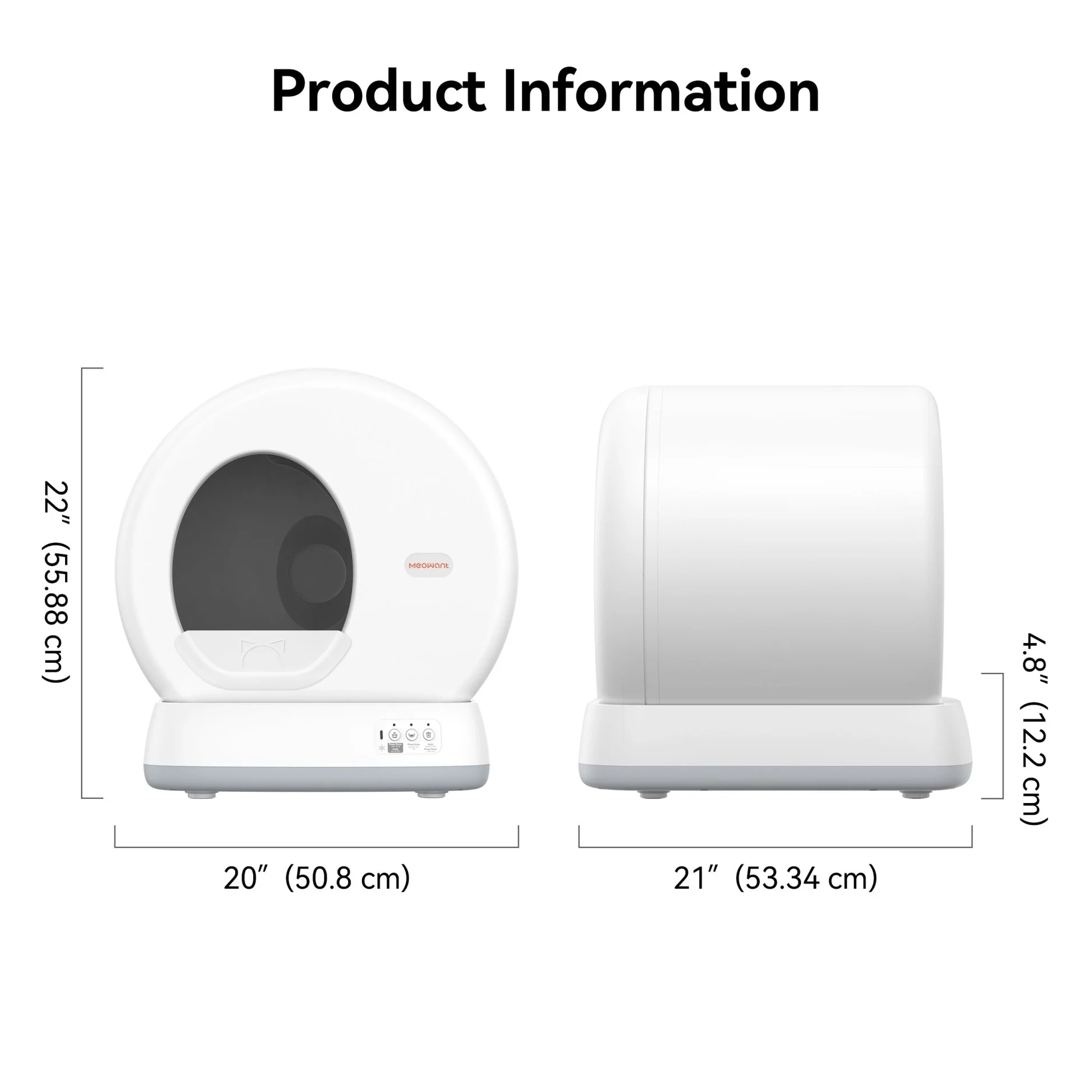
The enclosed Meowant Self-Cleaning Cat Litter Box – MW-SC01 lists a 57.6 L interior, ≤40 dB operation, a 4.8 in entry height, and dimensions of about 20.87×21.85×20.4 inches. Its litter bin is specified at 5 L, and the stated cat suitability runs roughly 3–18 lbs. For households that can spare the footprint and want a slightly larger toileting space and bin, SC01 is the more capacious enclosed choice.
The compact Meowant Self-Cleaning Cat Litter Box – MW-SC02 aims to fit smaller rooms. Specs show a 51.7 L interior, ≤38 dB noise, a 6.1 in entry height, and a 19.3×19.3×21.45 in footprint, with a 3.6 L waste bin. SC02’s slightly higher entry and smaller bin trade for the reduced size and quieter spec. Noise: ≤38 dB vs ≤40 dB is a modest difference on paper, but it matters if the unit sits near bedrooms.
Which to pick? Check footprint and entry height against the spot you’ll use. If you want longer stretches between emptying, SC01’s larger bin helps. If you need a compact cube and prioritize lower stated noise, SC02 fits better. Both support app monitoring and clumping litter, so the decision is primarily space and bin size.
What about SC09 and SC10?
Meowant’s XL enclosed SC09 targets large cats and multi-cat homes with a 106 L interior, a low entry, sealed waste plus deodorizer, and ≤38 dB operation. It’s designed for cats up to about 30 lbs and can extend the emptying interval under typical use. If you have a Maine Coon or share the box among several cats, SC09’s volume and sealed waste system are the reasons to consider it. It requires more floor space than SC01/SC02.
If your cats prefer open tops, the Meowant Self-Cleaning Cat Litter Box – MW-SC10 provides a 72 L open-top interior, a 9.48 in entry height, an enclosed 11.9 L waste drawer with an odor barrier, and a max noise figure of 35 dB. Open-top designs can feel less confining and allow taller cats to move without brushing a ceiling. The tradeoff is exposure: some cats may kick more litter, so placement and mats matter. Waste-bin size matters here—SC10’s drawer is 11.9 L, larger than SC01’s 5 L and SC02’s 3.6 L. SC09 emphasizes longer intervals (up to about 14 days) but does not list a drawer size.
After narrowing to a model, visit Meowant to review the latest specs, color options and any model-specific bundles before buying. The link is a general store link; look for the model page by name.
Setup, space, and app basics
Correct placement and litter choice make these boxes feel “set and forget” instead of fiddly. The numbers on Meowant’s pages are there for a reason: they tie directly to sensor accuracy and cleaning reliability. Below is a short setup flow that mirrors the official guidance.
Measure and place on a level floor
Measure the intended spot against the model’s dimensions and entry height so cats can step in easily without a jump. SC01 is around 20.87×21.85×20.4 in with a 4.8 in entry. SC02 is about 19.3×19.3×21.45 in with a 6.1 in entry. SC10’s open-top body runs 25.79×16.93×21.26 in with a 9.48 in entry. Allow clearance above and in front so the drum can rotate without nudging walls or cabinets.
Place the unit on a level, firm surface. Meowant’s pages specify level placement to support accurate weight sensing. Uneven floors can cause misreads—especially in multi-cat homes—so check with a small bubble level if the floor is sloped. For open-top SC10 users, positioning a mat in front helps capture kicked granules.
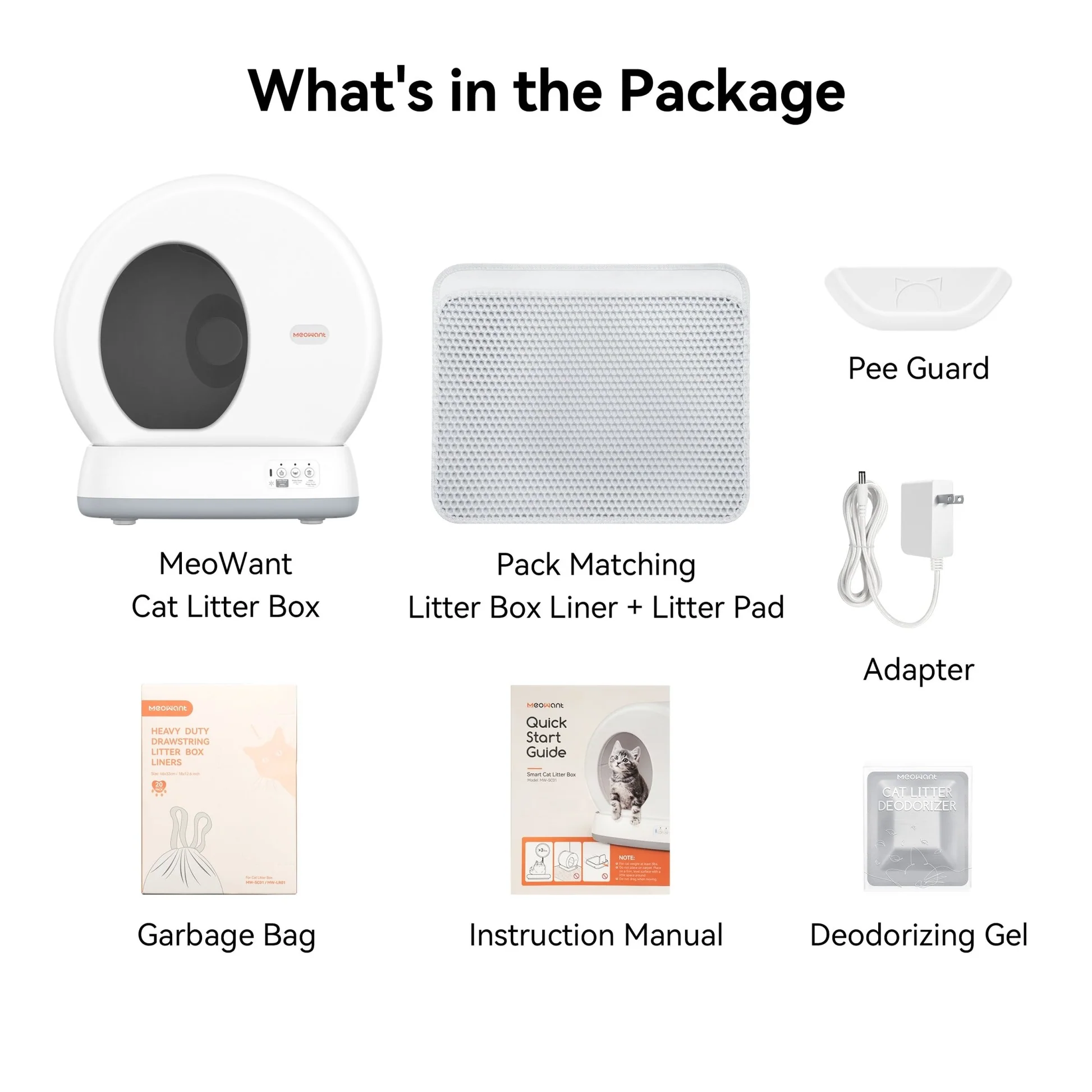
When your unit arrives, inspect that the drum sits squarely in the base and the waste drawer slides in and out smoothly. If your model uses a deodorizer insert, seat it securely to maintain the seal. If you plan to move the box later, recheck level and drawer seating after relocation.
Fill with clumping litter and connect the app
Fill to the recommended line with clumping litter. Meowant advises clumping litters—including bentonite, mixed or tofu varieties—with particles shorter than roughly 15 mm and avoiding non-clumping types. Use clumping litter only to keep the sifting screen clear and the drum balanced. Oversized particles can snag in the grate; if you switch brands, test a small bag before committing.
Download the app and pair the box if you plan to use activity logs and alerts. SC09 documentation explains the unit can run without Wi‑Fi and will start cleaning after your cat exits; the app adds health tracking, real-time alerts and remote controls. If your network is spotty where the box lives, it’s fine to run offline and check the drawer on a schedule.
For reference materials and model-specific instructions, you can visit Meowant and look for the user manual section by model name. Have your unit’s model ID handy during pairing so app entries track the correct box.
Odor control and routine upkeep that pays off
Odor control depends on two things: the box sealing waste effectively and you keeping the drawer and chute from overloading. Meowant’s pages highlight odor-control features across models; translating that into a simple routine keeps the home fresher and the drum clearing smoothly.
Keep the waste bin on schedule
Match your emptying schedule to bin size and usage. SC01’s bin is larger than SC02’s (5 L vs 3.6 L), so a single-cat home may run longer between drawer changes on SC01. SC10’s 11.9 L drawer is the biggest; XL SC09 aims for up to about two weeks under typical use. Rather than waiting for a full drawer, build a cadence that prevents compression at the chute. Empty before overfilling—it helps the drum complete cycles without straining.
Bag liners can speed drawer changes, but check fit so the liner doesn’t interfere with seals. If you notice the lid sitting proud after a change, reseat the bag edges and press the drawer fully home.
Clean chute and seals regularly
Once a week, power the unit off and wipe the waste chute and door seals with a lightly damp cloth. Wipe chute and seals to remove fine litter and prevent clumps from wedging the gate open. If your model uses a deodorizing gel or cartridge, inspect it during this routine and replace per the product page’s guidance.
SC10’s IPX5-rated design is meant to make routine cleaning easier, but avoid rinsing electrical components directly unless the manual says so. For enclosed models, also check the drum’s inner surface for adhered clumps; a quick scrape with a plastic scoop prevents later jams.
For accessories such as replacement liners or deodorizer inserts, visit Meowant and match items by model name to ensure a proper fit.
Fast fixes for a stuck cycle or rising odors
If a cycle halts or odors rise, a few quick checks resolve most issues safely. Start with power: toggle the unit off and back on to clear transient errors. Remove any oversized clumps sitting near the grate; Clear oversized clumps so the drum can rotate freely. Verify litter depth—too little and the screen can scrape the base, too much and clumps may not separate cleanly.
Next, recheck placement. Re-level the unit on a firm floor to stabilize weight readings; even a slight tilt can confuse sensors in multi-cat households. Slide the waste drawer out and in to confirm the seal is seated and the sensor path is unobstructed.
If the app shows an error, note the code before rebooting and confirm the model is paired correctly. When Wi‑Fi is unavailable (or for SC09 users opting to run offline), the unit should still resume automatic cleaning after your cat exits; app features add logs and alerts but aren’t required for basic function. For persistent faults, contact Meowant support with the model ID, error code and any app logs so they can advise on next steps.
Real-world pros, limits, and the stated policies
Real strengths come from quiet operation by spec, app monitoring and support for clumping litter. SC02’s ≤38 dB figure and SC01’s ≤40 dB keep noise modest for an appliance you’ll place near living areas, and both include app-based health logs. The limits are equally practical: stay within the listed cat-weight ranges, pick compatible litter, and measure your space so the unit doesn’t crowd a doorway or cabinet.
Meowant’s site banners state a 2-year warranty, a 30-day trial, and free shipping over $100. Policies can change, so Read policy details on the store before you buy. You can visit Meowant to review the current warranty and return/refund terms and to find model-specific manuals.
What’s the next step? Pick your model based on cat size and space, confirm placement on a level floor, and order clumping litter that falls within the recommended particle size. Those two checks—fit and litter—do most of the work to keep cycles smooth.
FAQs
Which cats can use these models? SC01 lists suitability around 3–18 lbs with a 4.8 in entry. SC02 lists roughly 3–22 lbs with a 6.1 in entry. SC09 targets large cats up to about 30 lbs with a spacious 106 L interior. SC10 notes a 3.3+ lb minimum and a taller 9.48 in entry. Always match weight and entry height to your cat’s comfort.
Do I need Wi‑Fi to use it? No—SC09 documentation says it operates without Wi‑Fi and cleans after your cat exits; Wi‑Fi adds app tracking, alerts and remote control. Other models also emphasize app features; if your coverage is weak, you can run offline and check the drawer on a schedule.
What litter should I use? Meowant specifies clumping litter with particles shorter than roughly 15 mm and discourages non-clumping types. This helps the screen separate waste and prevents jams.
How loud is it? SC02’s stated figure is ≤38 dB and SC01’s is ≤40 dB. SC10 lists a maximum of 35 dB. In practice, placement and room acoustics influence perceived sound, so consider distance from sleeping areas if you plan overnight auto-cleaning.
How do I control odors? Use sealed drawers and deodorizer inserts as designed, empty on a schedule before the bin overloads, and wipe the chute and seals weekly. SC10 and SC09 pages describe deodorizing and sealed-waste features that support this routine.
Where can I find manuals and accessories? Visit Meowant to locate model-specific manuals and accessories; match items by model name to ensure fit.