Instarem international transfers: a practical guide for US senders

This article contains affiliate links. We may earn a commission if you buy through them.
For US senders considering Instarem international transfers, the situation is familiar: You need to move dollars from the United States to an overseas bank account within the next few days. Perhaps a relative is waiting for family support, a tuition payment is due, or you are moving savings and want to know the recipient’s eventual amount before pressing send. The practical question is not simply which provider advertises the lowest fee. It is whether the rate, fee, delivery estimate and destination rules are visible for your particular transfer.
For Instarem international transfers, the useful starting point is the live quote for your corridor. Instarem says its rates and fees vary by sending amount, currency, payment method and receiving country, while its US service presents costs before confirmation. That makes it possible to compare the full transfer rather than guessing from a headline fee. You can visit Instarem to inspect the current options for your route, then decide whether the estimate suits your deadline.
Why Instarem international transfers deserve a look
Instarem positions its US service around international transfers with upfront costs, competitive exchange rates and low fees. Its official US page also says the service is licensed and regulated in 11 countries and supports sending from the United States to more than 60 countries. Those details matter because a sender is choosing both a price and a process: a visible quote can make comparison easier, while broad coverage may reduce the need to search for a separate provider for each recipient country.
The provider says transfers are usually completed within one to two business days and that customers can track money through its web and app options. “Usually” is the important word. The estimate can change with the currency, payment method and receiving bank’s timing, so actual arrival can differ from the initial estimate. Delivery times vary by corridor. If the recipient has a fixed deadline, allow room for those variables rather than treating the headline estimate as a promise.
Coverage is also conditional. Instarem lists more than 60 destinations, but it says a location that does not appear in its supported list may not be available at that time. A regulated, trackable service can therefore be a strong option to investigate, not an automatic fit for every payment. Check the route, currency and receiving-account requirements before committing.
What transparent pricing means when you send USD abroad
A transfer has more than one cost. The fee may be displayed separately, while the exchange rate determines how many foreign-currency units reach the recipient. A provider with a small visible fee can still produce a less useful result if its exchange-rate margin is wider. The comparison that matters is the amount you pay in dollars against the amount the recipient is expected to receive, along with the estimated delivery time.
Instarem says its costs are shown upfront and that its rates and fees change with market conditions and transfer details. That means a quote is a snapshot for the transaction you are setting up, not a permanent rate card. Recheck the amount immediately before sending, especially if the market is moving or you have delayed after creating the quote. Compare the full amount, not just the fee.
The service also advertises rate alerts. For a non-urgent savings move, an alert may help you notice a preferred exchange-rate level before setting up the transfer. It does not predict the market, and a more favorable quote may never appear. For a payment due this week, timing and certainty may matter more than waiting for a rate that might never appear.
Payment method matters as well. The official page says fees and exchange rates vary by payment method, so compare the quote using the method you actually intend to use. If the recipient needs a precise amount, record the displayed fee, rate and estimated arrival before confirming, then compare those figures with your bank’s equivalent quote.
Coverage and typical speed from the United States
Instarem lists US sending routes to destinations across Africa, Asia-Pacific, Europe and the Americas, including India, Mexico, Malaysia, the Philippines and the United Kingdom. It also lists USD pairings such as USD-to-INR and USD-to-MXN. The practical benefit is breadth: a sender can first test whether the needed destination and currency are available instead of assuming that a familiar provider supports every route.
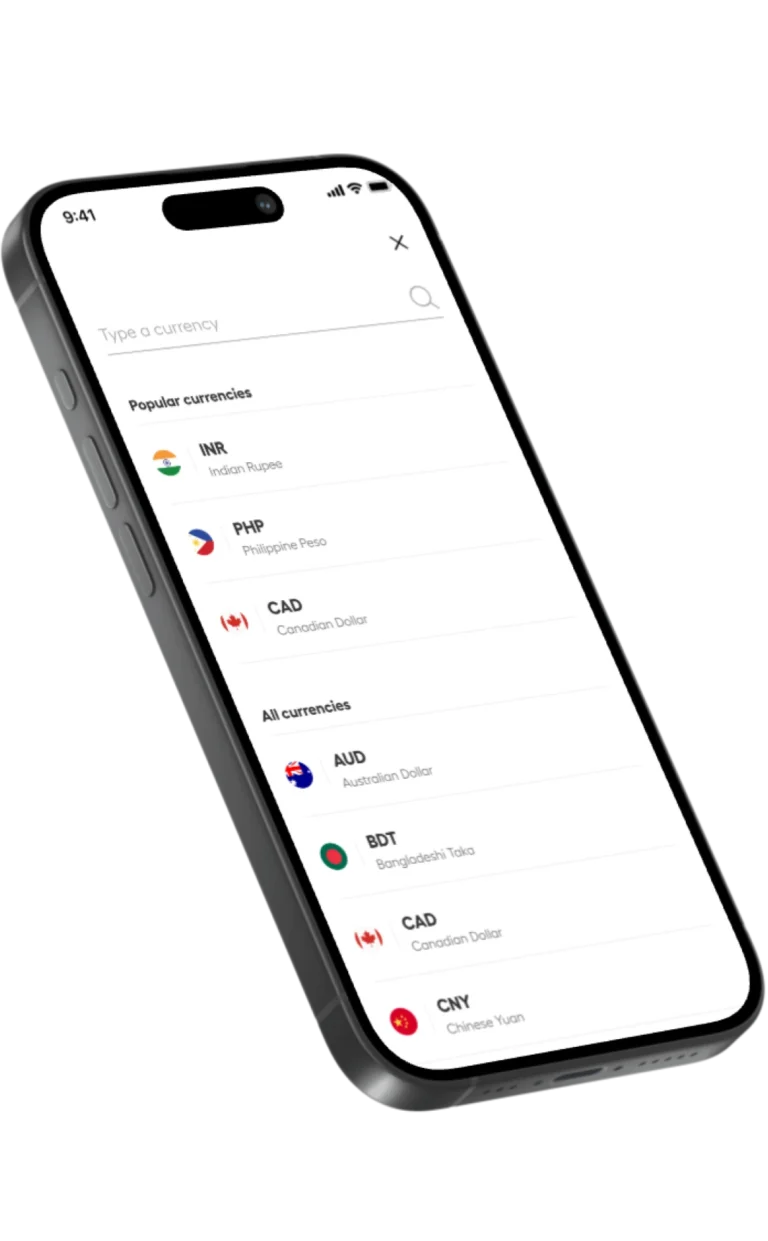
Check the destination before planning around a deadline. If the country or currency pair does not appear, the route may not currently be supported. Availability can also depend on the receiving bank and transaction details, so the live transfer flow is the useful final check.
The stated delivery time is usually one to two business days, but the official page qualifies that estimate by referring to currency, payment method and bank timings. Weekends, bank holidays, local processing and information mismatches can affect the practical arrival time. Instarem says real-time tracking is available through its app and web experience, which gives the sender a way to follow the transfer after it has been initiated.
Tracking helps answer “where is the payment?” but it does not remove the need to verify recipient details. Check the beneficiary name, account number, routing information and destination currency before confirmation. A transfer service can show status; it cannot correct an incorrect account instruction after the fact without its own review process.
Special case: funding an FCNR deposit from the US
US-based nonresident Indians have a more specialized decision when they are sending USD to fund a Foreign Currency Non-Resident deposit in India. In this situation, the transfer provider moves the money, but the receiving bank’s instructions determine how the payment is identified and booked. Instarem can be relevant because its official material says the transfer flow allows a custom comments or description field and displays the exchange-rate margin upfront.
For a Kotak FCNR funding flow, the supplied bank guidance says to remit USD to an existing Kotak NRE account using SWIFT code KKBKINBB, enter “FCNR Deposit” in the comments field and send a completed, signed FCNR deposit form separately. The form and payment are connected parts of the process. Sending only one of them can leave the funds unbooked while the bank waits for the missing instruction.
For HDFC, the guidance is different. It says the sender needs an existing HDFC NRE account and must include the HDFC Customer ID in the transfer narrative, together with the FCNR deposit details such as tenure and amount when applicable. HDFC, rather than the remittance provider, books the deposit once the funds and instructions are matched. Match the bank’s instructions exactly.
A hypothetical US sender funding Kotak should therefore prepare the existing NRE account information, confirm the SWIFT code with the bank, enter the exact comments wording, and send the signed form close to the transfer date. A sender funding HDFC should confirm the Customer ID and required FCNR details before using the comments field. In either case, do not assume that a generic transfer reference will substitute for the bank’s required wording.
US tax treatment is a separate question from the transfer. The supplied guidance states that US residents are generally taxed on worldwide income and that foreign-account reporting may apply depending on the person’s circumstances. This is not tax advice. Ask a qualified tax professional about reporting the interest and any FBAR or Form 8938 obligations before treating a cross-border deposit as administratively complete.
Getting started: accounts, compliance and sign‑up
Instarem says its quick sign-up is available through both the web and app experience. In the United States, its page identifies Nium, Inc. as the fintech technology provider for Instarem services and Community Federal Savings Bank as the provider of payment services. The same page states that Instarem is licensed and regulated in 11 countries.
Those statements explain the service structure, but they do not mean every transfer has identical onboarding. Verification requirements and timing can vary with the sender’s profile, payment method and corridor. If the payment is time-sensitive, create the account and check the route before the day the money is needed. Have accurate personal and recipient information ready, and avoid leaving verification until the final hour.
When Instarem may beat a bank wire — and when it won’t
A bank wire may be convenient when you already use the bank, need its account-management services or have a relationship process that suits the payment. Instarem’s distinction is the way it presents the transfer price: its official material says the exchange-rate margin and fee are shown before sending and that there is no separate wire fee layered on afterward in the way some bank transfers may work.
That does not make the online service universally cheaper or faster. Banks and providers may use different routes, payment methods and receiving-bank arrangements. Compare the total dollars required, the expected amount received, the delivery estimate and any recipient-bank charges that appear in the quote or bank instructions. Upfront pricing is useful only when you compare like for like.
For a large transfer, even a modest difference in the exchange-rate margin can matter more than a small headline fee. For a routine family payment, the ability to track the transfer may be more valuable than a tiny price difference. The right choice depends on the transaction’s purpose and deadline, not on a universal claim about banks or fintech providers.
Tools that help: alerts, tracking and InstaPoints
Rate alerts can help a sender watch a preferred market level, while app and web tracking can make an active payment easier to follow. These tools support planning and visibility; a better exchange rate or a particular arrival time is not assured. Use them as decision aids, especially when the transfer is not urgent.
Instarem also says eligible transactions earn InstaPoints. The value depends on program terms and eligibility, so points should be treated as an additional consideration rather than the reason to overlook the live rate or fee. Check the current rewards terms before relying on them. A reward cannot compensate for a route that is unavailable or a quote that does not suit the amount the recipient needs.
A worked decision: USD-to-INR vs another corridor
Suppose a US sender needs to move USD to an Indian bank account. The first step is to enter the amount, destination and payment method, then record the displayed fee, exchange rate, recipient amount and estimated timing. The sender should compare that complete result with a bank-wire quote, not just compare Instarem’s fee with the bank’s fee.
If the payment is for an FCNR deposit, the sender adds the bank-specific requirement before confirmation: “FCNR Deposit” for the Kotak process, or the HDFC Customer ID and required deposit details for HDFC. The sender then confirms that the receiving account, currency and supporting form are correct. If any instruction is unclear, the receiving bank is the right place to ask before sending.
For a USD-to-MXN transfer, the same method applies without importing the India-specific FCNR steps: confirm that Mexico is supported, compare the full cost and estimated timing, verify the recipient’s bank details, and review the live quote immediately before sending. Quotes and timing are corridor-specific.
That is the practical decision. Start by checking your destination and live total, then compare it with the bank alternative. Proceed only if the route is supported, the recipient amount meets the need, the estimate fits your deadline and any bank-specific references or forms are ready.